No products
Categories
- Fashion Accessories
- Clothing
- Beauty & Lifestyle
-
Hi-Tech & Lifestyle
- Gaming
-
Case
- iPhone 11 Pro
- iPhone 11 Pro Max
- iPhone 11
- iPhone X / XS
- iPhone XS Max
- Samsung S10 / S10+ / S10e
- Huawei P30 / P30 Pro / P30 Lite
- Huawei P20 / P20 Pro / P20 Lite
- iPhone XR
- Samsung S9
- Samsung S9+
- iPhone 8 / 7
- iPhone 8 Plus / 7 Plus
- Samsung S8
- Samsung S8+
- Samsung S7
- Samsung S7 Edge
- iPhone 6 / 6 s
- iPhone 6 Plus / 6 s Plus
- iPhone 5 / SE
- Skin
- Audio
- Smart Home
- Drones & Hoverboard
- Photo & Video
- Desk Supplies
- Accessories
- Games
- Beverages
- Food
- Home
- Jewelry
- Luxury
- Travel
- Art
- Footwear
- Vintage Fashion
- Restaurants
- Sport
- Animals
- Gift Ideas
- Kidswear
Extra


Viewed Products
-

Jimmy Choo - Rose Passion EDP - Jimmy Choo Rose Passion Eau De Parfum -...
Inspired by the allure of the French...
-

TecknoMonster - Sinossi Big TecknoMonster - Aeronautical Carbon Fibre Trolley...
Carbon Fibre Trolley Opal Glacies,...
-

Mikol Marmi - Weathered Gemstone Marble Beaded Bracialet - Real Marble -...
Weathered beaded bracelet is designed...
-

Coltellerie Berti - 1895 - The Small Carving Machine - N. 932 - Exclusive...
Exclusive Berti 1895 cutlery set....
-

Villa Sandi - Brut - Opere Trevigiane - Mathusalem - Wooden Box - Quality...
Bright pale straw yellow and a...
-

Prada - Prada Cinéma - Cat-Eye Sunglasses - Black White - Prada Collection -...
Sunglasses characterized by the...
Alexander McQueen Eyewear
The Fashion Between Revolution and The Ancient Regime

Identity

Lee Alexander McQueen was born in 1969 and began working at sixteen, learning the basics of the fashion industry in Savile Row and, later, in Milan, from Romeo Gigli.

After the experience in Italy, he decided to complete his training by attending the Saint Martin's School of Art in London and in 1992 he founded his Fashion House, obtaining immediate support and recognition from the greatest icons of British fashion.

From 1996 to 2001 he worked as creative director of Givenchy, a Maison where he wasn’t able to express his creativity. Moreover, during these years, he tried to practice experimentation and redefinition of the stylistic canons of the brand.

Thanks to this period the designer became well known for his transgressive and shocking fashion shows.

To the point of being called "fashion hooligan".

The Maison Alexander McQueen stands out for being an innovative and uncompromising expression of overwhelming creativity.

Today, the Maison is synonymous with contemporary British Haute Couture.

The main sources of inspiration for the brand are the history of Great Britain and nature.

Through a constant exploration of the natural world, the Maison uses the values of the English rural tradition.

As well as a certain sense of community and handmade, while expanding the boundaries of fashion.

The juxtaposition of feminine and masculine, strength and fragility, romanticism and rebellion, man and machine are an integral part of the culture of Alexander McQueen.

He was loved by many stars for his extravagance and originality; his philosophy was also followed by Sarah Burton.

Actual creative director of the Maison, who took the lead after the designer’s death.

She also designed the wedding dress of the Duchess of Cambridge for the wedding with William.

Thanks to bustiers, dark elements and Gothic patterns, Alexander McQueen strengthened his creativity with a clever technique of cutting and building in modeling, paving the way for new tailoring experiments.

Products Alexander McQueen Eyewear
Products Alexander McQueen
Alexander McQueen Eyewear
The Fashion Between Revolution and The Ancient Regime
Identity
Lee Alexander McQueen was born in 1969 and began working at sixteen, learning the basics of the fashion industry in Savile Row and, later, in Milan, from Romeo Gigli.
After the experience in Italy, he decided to complete his training by attending the Saint Martin's School of Art in London and in 1992 he founded his Fashion House, obtaining immediate support and recognition from the greatest icons of British fashion.
From 1996 to 2001 he worked as creative director of Givenchy, a Maison where he wasn’t able to express his creativity. Moreover, during these years, he tried to practice experimentation and redefinition of the stylistic canons of the brand.
Thanks to this period the designer became well known for his transgressive and shocking fashion shows.
To the point of being called "fashion hooligan".
The Maison Alexander McQueen stands out for being an innovative and uncompromising expression of overwhelming creativity.
Today, the Maison is synonymous with contemporary British Haute Couture.
The main sources of inspiration for the brand are the history of Great Britain and nature.
Through a constant exploration of the natural world, the Maison uses the values of the English rural tradition.
As well as a certain sense of community and handmade, while expanding the boundaries of fashion.
The juxtaposition of feminine and masculine, strength and fragility, romanticism and rebellion, man and machine are an integral part of the culture of Alexander McQueen.
He was loved by many stars for his extravagance and originality; his philosophy was also followed by Sarah Burton.
Actual creative director of the Maison, who took the lead after the designer’s death.
She also designed the wedding dress of the Duchess of Cambridge for the wedding with William.
Thanks to bustiers, dark elements and Gothic patterns, Alexander McQueen strengthened his creativity with a clever technique of cutting and building in modeling, paving the way for new tailoring experiments.
Products Alexander McQueen Eyewear
Products Alexander McQueen
-
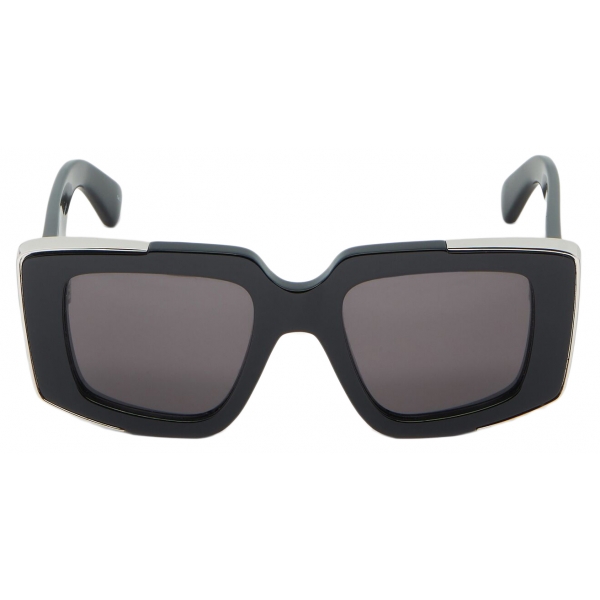 323,00 € 380,00 € -15% In Stock
Alexander McQueen - Women's The Grip Geometrical Sunglasses - Black Smoke -...
Black geometric sunglasses fitted with solid smoke lenses. The sunglasses are detailed with two silver metal end pieces and a tonal lasered Alexander McQueen signature on both sides.
323,00 € 380,00 € -15%Reduced price ! -
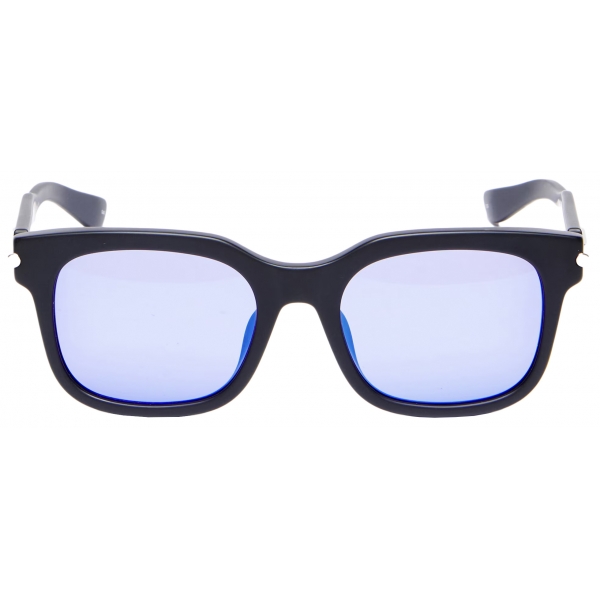
Alexander McQueen - City T-Bar Rectangular Sunglasses - Black Blue -...
Matte black acetate sunglasses fitted with flashed blue lenses. The sunglasses have a rectangular shape and feature a statement metal T-Bar floating on the temples and finished with a lasered McQueen logo.
297,50 € 350,00 € -15%Reduced price ! -
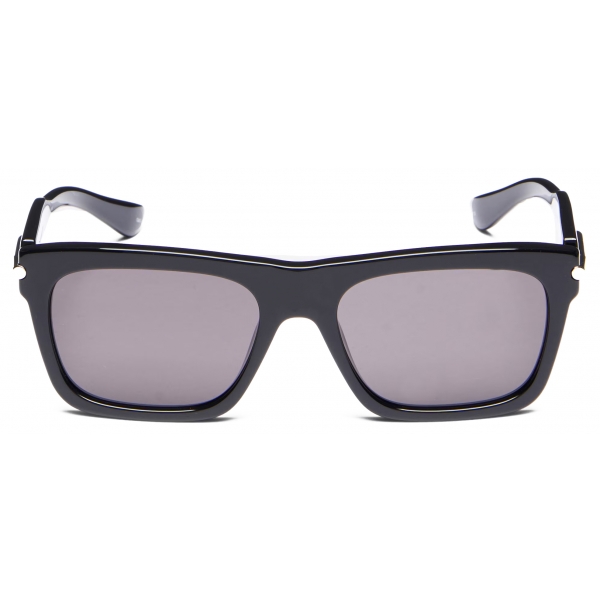
Alexander McQueen - Men’s City T-Bar Rectangular Sunglasses - Black Smoke -...
Black acetate sunglasses fitted with solid smoke lenses. The sunglasses have a rectangular shape and feature a statement silver metal T-Bar floating on the temples and finished with a lasered McQueen logo.
297,50 € 350,00 € -15%Reduced price ! -
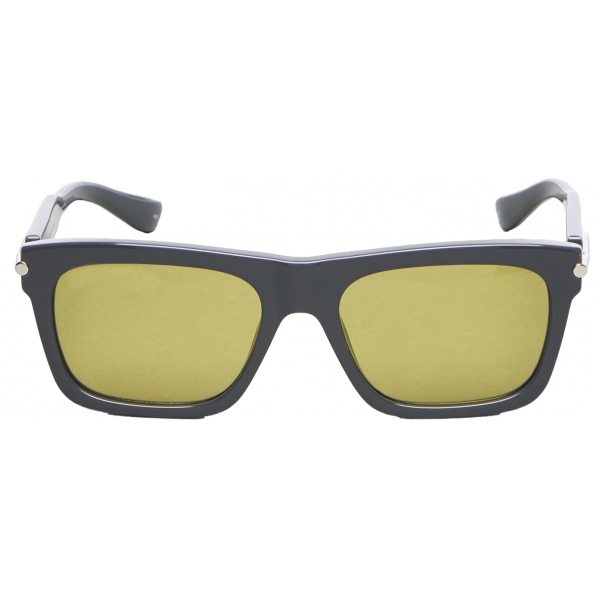
Alexander McQueen - Men’s City T-Bar Rectangular Sunglasses - Grey Yellow -...
Grey acetate sunglasses fitted with solid brownish lenses. The sunglasses have a rectangular shape and feature a statement silver metal T-Bar floating on the temples and finished with a lasered McQueen logo.
297,50 € 350,00 € -15%Reduced price ! -
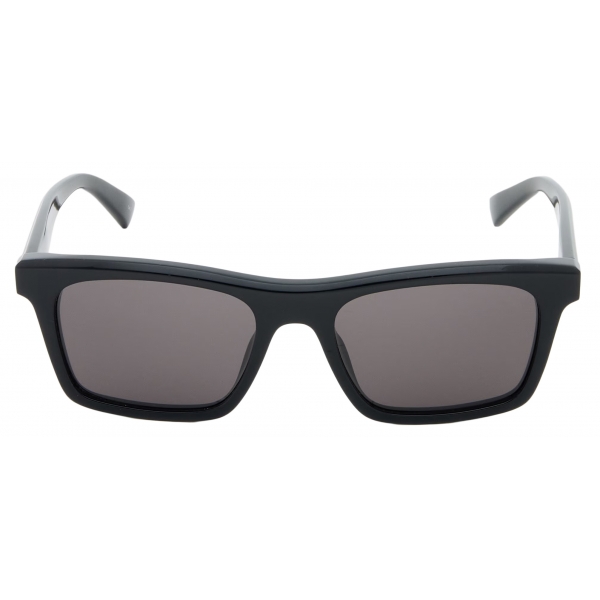
Alexander McQueen - Men’s McQueen Logo Rectangular Sunglasses - Black Smoke -...
Black acetate sunglasses fitted with solid smoke lenses. The sunglasses have a rectangular shape and are detailed with a silver McQueen logo on the temples.
212,50 € 250,00 € -15%Reduced price ! -
Alexander McQueen - Men’s McQueen Logo Rectangular Sunglasses - Blue -...
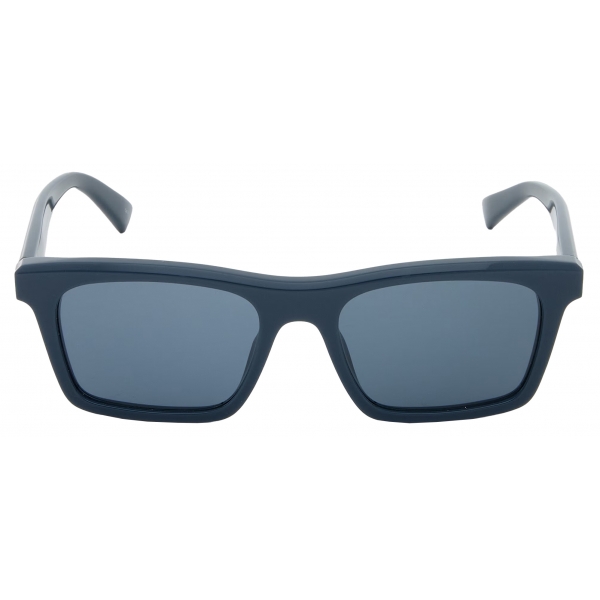
Blue acetate sunglasses fitted with solid blue lenses. The sunglasses have a rectangular shape and are detailed with a silver McQueen logo on the temples.
212,50 € 250,00 € -15%Reduced price ! -
Alexander McQueen - Men's Metal T-Bar Navigator Sunglasses - Silver Brown -...
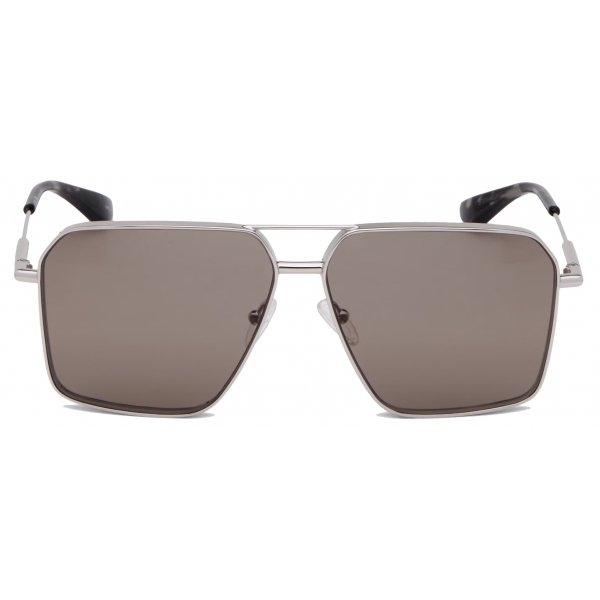
Silver metal sunglasses fitted with solid brown lenses. The sunglasses have a navigator shape and feature a statement T-Bar integrated on the temples with a lasered McQueen logo. Finished with adjustable nose pads and acetate end tips on the temples.
297,50 € 350,00 € -15%Reduced price ! -
Alexander McQueen - Men's Metal T-Bar Navigator Sunglasses - Yellow -...
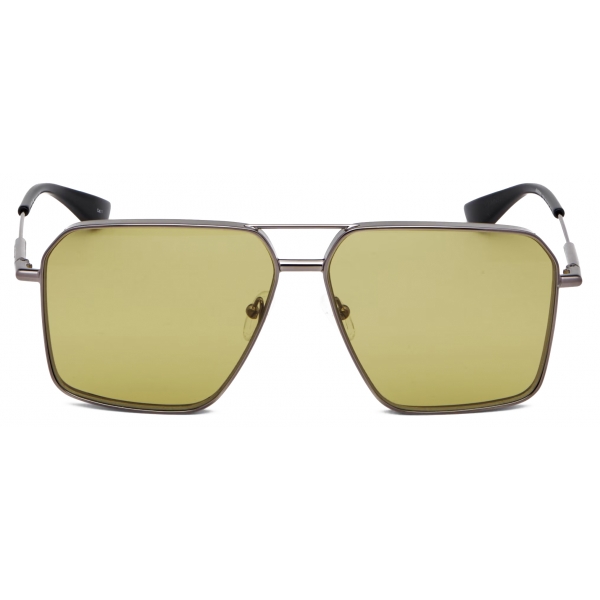
Ruthenium metal sunglasses fitted with solid yellow lenses. The sunglasses have a navigator shape and feature a statement T-Bar integrated on the temples with a lasered McQueen logo. Finished with adjustable nose pads and acetate end tips on the temples.
297,50 € 350,00 € -15%Reduced price ! -
Alexander McQueen - Women's Side T-Bar Sunglasses - Black Smoke - Alexander...
Black acetate sunglasses with metal temples fitted with solid smoke lenses. The sunglasses have a geometrical shape and feature a statement T-Bar on the sides. The metal temples are finished with the lasered McQueen logo and acetate end tips.
297,50 € 350,00 € -15%Reduced price ! -
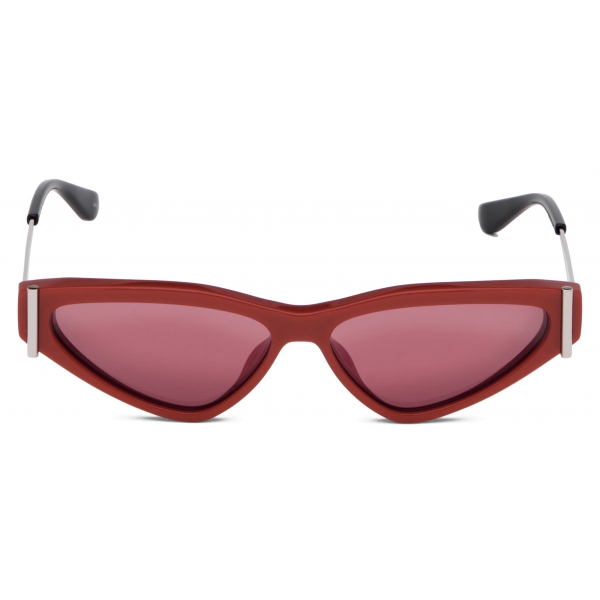
Alexander McQueen - Women's Side T-Bar Sunglasses - Red Silver - Alexander...
Red acetate sunglasses with metal temples fitted with flashed red lenses. The sunglasses have a geometrical shape and feature a statement T-Bar on the sides. The metal temples are finished with the lasered McQueen logo and acetate end tips.
297,50 € 350,00 € -15%Reduced price ! -
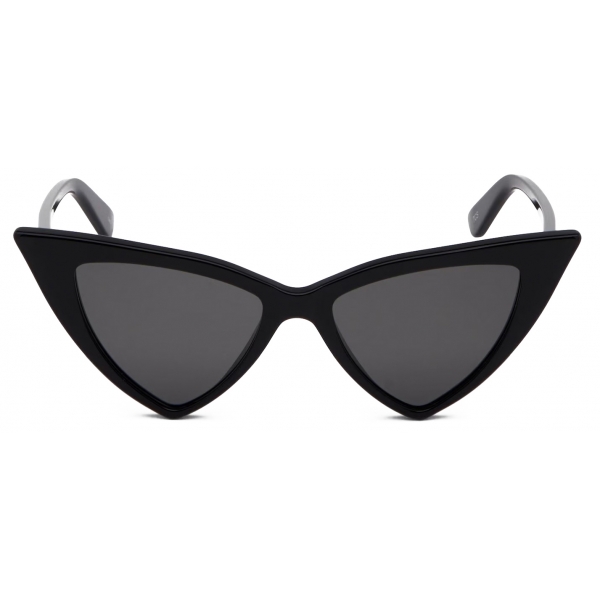
Alexander McQueen - Women's Spike Sunglasses - Black Smoke - Alexander...
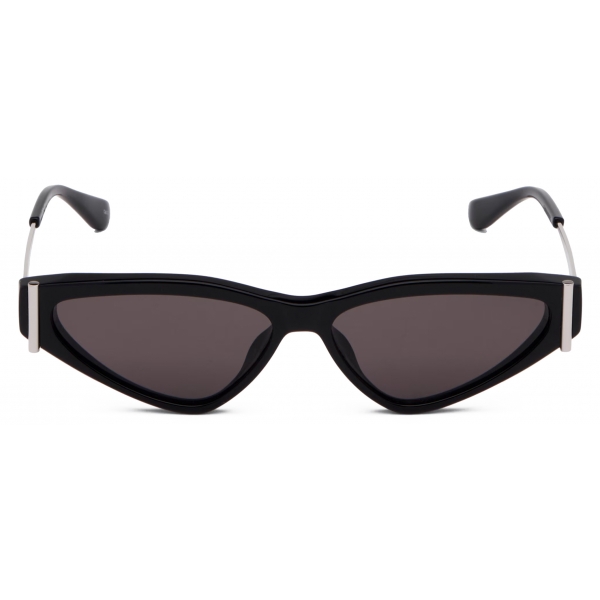
Black acetate sunglasses fitted with solid smoke lenses. The sunglasses have a sharp cat-eye shape and feature a lasered McQueen logo with silver enamel on the thin temples.
212,50 € 250,00 € -15%Reduced price ! -
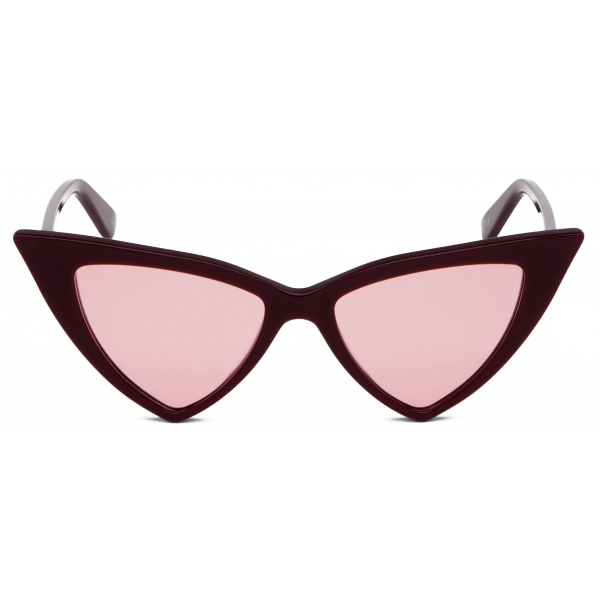
Alexander McQueen - Women's Spike Sunglasses - Burgundy Pink - Alexander...
Burgundy acetate sunglasses fitted with solid pink lenses. The sunglasses have a sharp cat-eye shape and feature a lasered McQueen logo with silver enamel on the thin temples.
212,50 € 250,00 € -15%Reduced price ! -
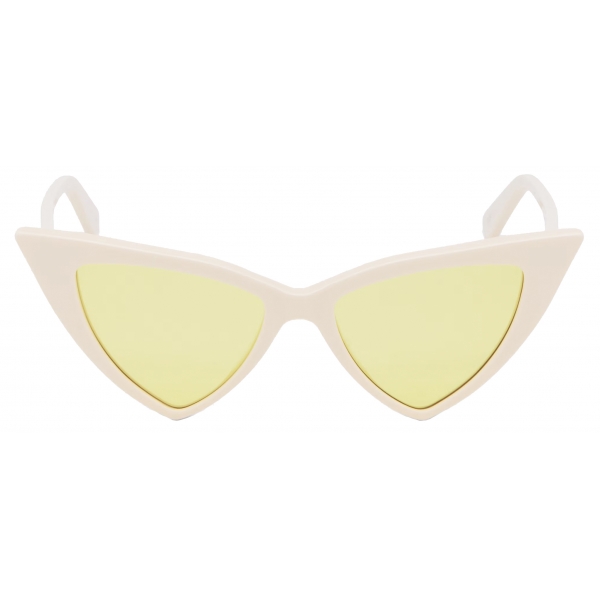
Alexander McQueen - Women's Spike Sunglasses - Ivory Yellow - Alexander...
Ivory acetate sunglasses fitted with solid yellow lenses. The sunglasses have a sharp cat-eye shape and feature a lasered McQueen logo with silver enamel on the thin temples.
212,50 € 250,00 € -15%Reduced price ! -
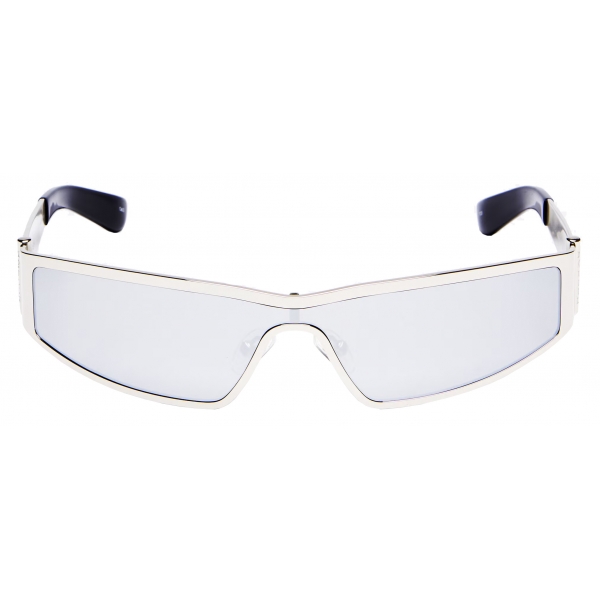
Alexander McQueen - Y2k Metal Sunglasses - Light Silver - Alexander McQueen...
Wraparound mask sunglasses in silver metal with mirrored silver lens. The sunglasses are detailed with a statement silver metal T-Bar on the hinge finished with a lasered McQueen logo.
493,00 € 580,00 € -15%Reduced price ! -
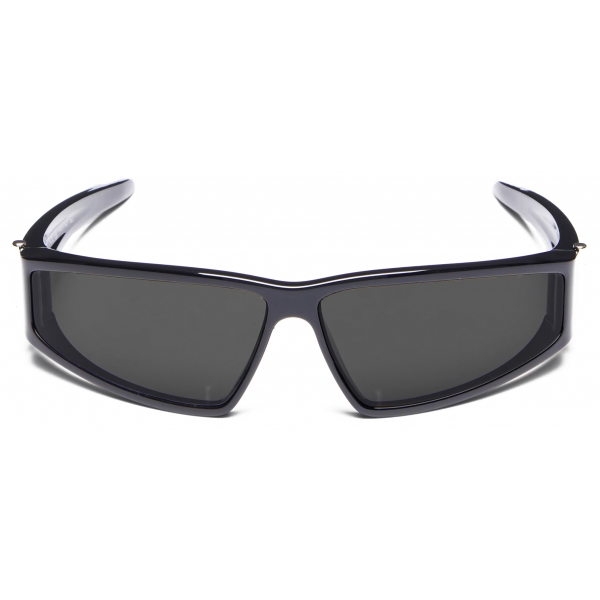
Alexander McQueen - Y2k Sunglasses - Black Smoke - Alexander McQueen Eyewear
Wraparound sunglasses in black bio-based injected nylon with solid smoke lenses. The sunglasses are detailed with a statement silver metal T-Bar on the hinge finished with a lasered McQueen logo.
331,50 € 390,00 € -15%Reduced price ! -
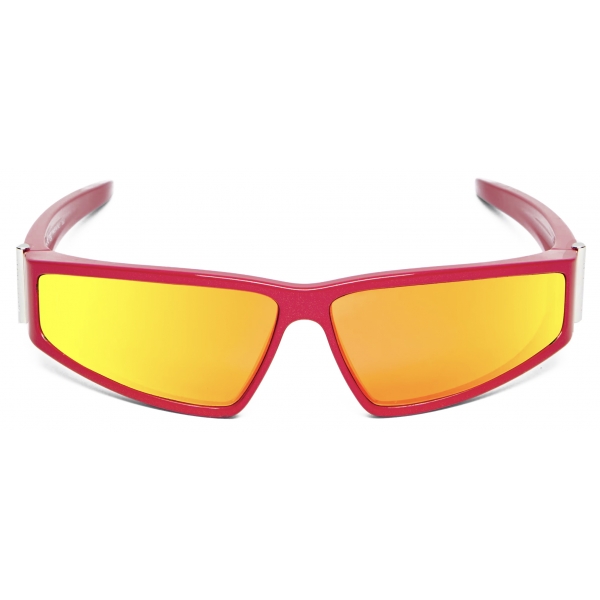
Alexander McQueen - Y2k Sunglasses - Red Orange - Alexander McQueen Eyewear
Wraparound sunglasses in red bio-based injected nylon with mirrored orange lenses. The sunglasses are detailed with a statement silver metal T-Bar on the hinge finished with a lasered McQueen logo.
357,00 € 420,00 € -15%Reduced price ! -
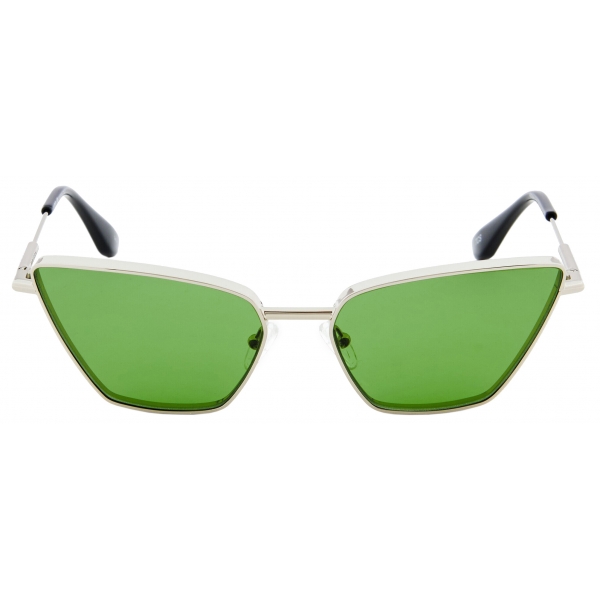 297,50 € 350,00 € -15% In Stock
Alexander McQueen - Women's Metal T-Bar Cat-Eye Sunglasses - Silver Green -...
Silver metal sunglasses fitted with solid green lenses. The sunglasses have a cat-eye shape and feature a statement T-Bar on the temples with a lasered McQueen logo. Finished with adjustable nose pads and acetate tips.
297,50 € 350,00 € -15%Reduced price ! -
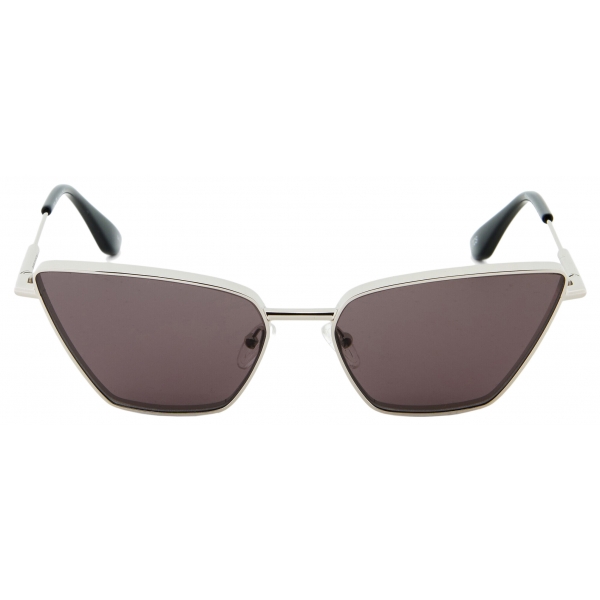 297,50 € 350,00 € -15% In Stock
Alexander McQueen - Women's Metal T-Bar Cat-Eye Sunglasses - Silver Smoke -...
Silver metal sunglasses fitted with solid smoke lenses. The sunglasses have a cat-eye shape and feature a statement T-Bar on the temples with a lasered McQueen logo. Finished with adjustable nose pads and acetate tips.
297,50 € 350,00 € -15%Reduced price ! -
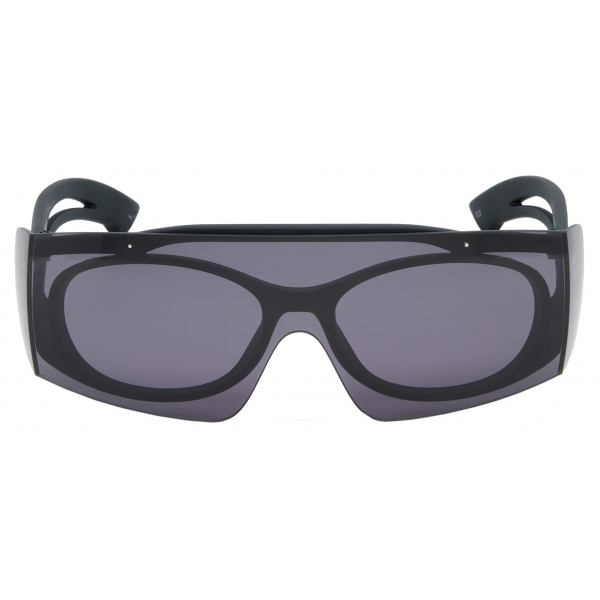 357,00 € 420,00 € -15% In Stock
Alexander McQueen - Two-Tone Sunglasses - Black Smoke - Alexander McQueen...
Two-tone sunglasses featuring a matte black injected frame embedded in a solid smoke mask, creating the illusion of two pairs of glasses. The sunglasses are detailed with a vertical lasered McQueen logo on the side spoiler.
357,00 € 420,00 € -15%Reduced price ! -
 212,50 € 250,00 € -15% In Stock
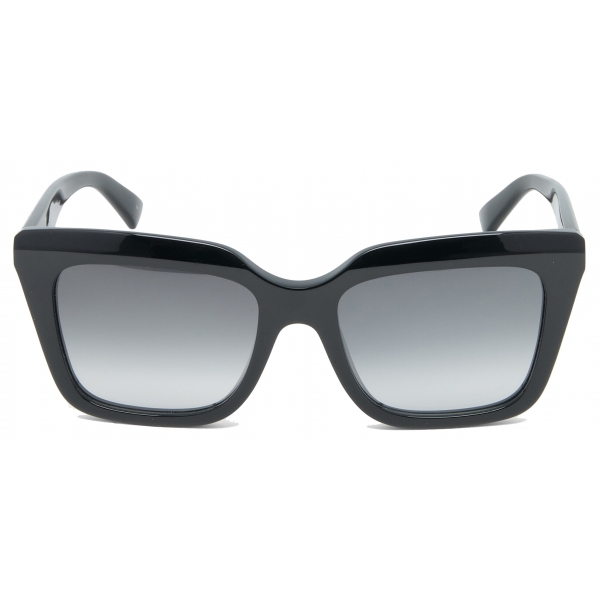
Alexander McQueen - Women's McQueen Logo Geometric Sunglasses - Black Smoke -...
Black acetate sunglasses fitted with solid smoke lenses. The sunglasses have a geometric shape and are detailed with a silver McQueen logo on the temples.
212,50 € 250,00 € -15%Reduced price ! -
 357,00 € 420,00 € -15% In Stock
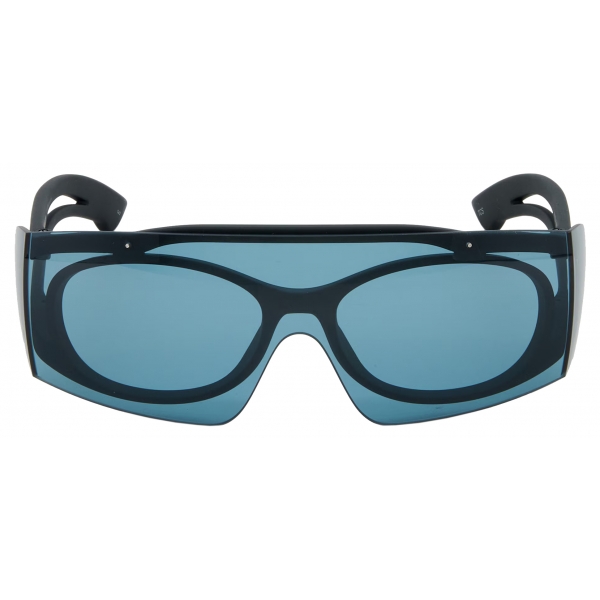
Alexander McQueen - Two-Tone Sunglasses - Black Blue - Alexander McQueen Eyewear
Two-tone sunglasses featuring a matte black injected frame embedded in a solid blue mask, creating the illusion of two pairs of glasses. The sunglasses are detailed with a vertical lasered McQueen logo on the side spoiler.
357,00 € 420,00 € -15%Reduced price !